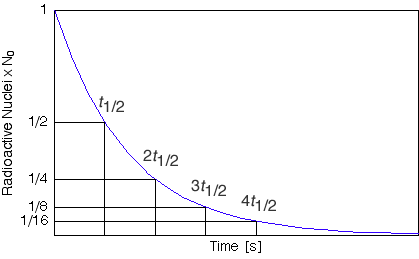
Radioactive decay - AQA With the wrong number of neutrons nuclei can fall apart. This is a random process ie.
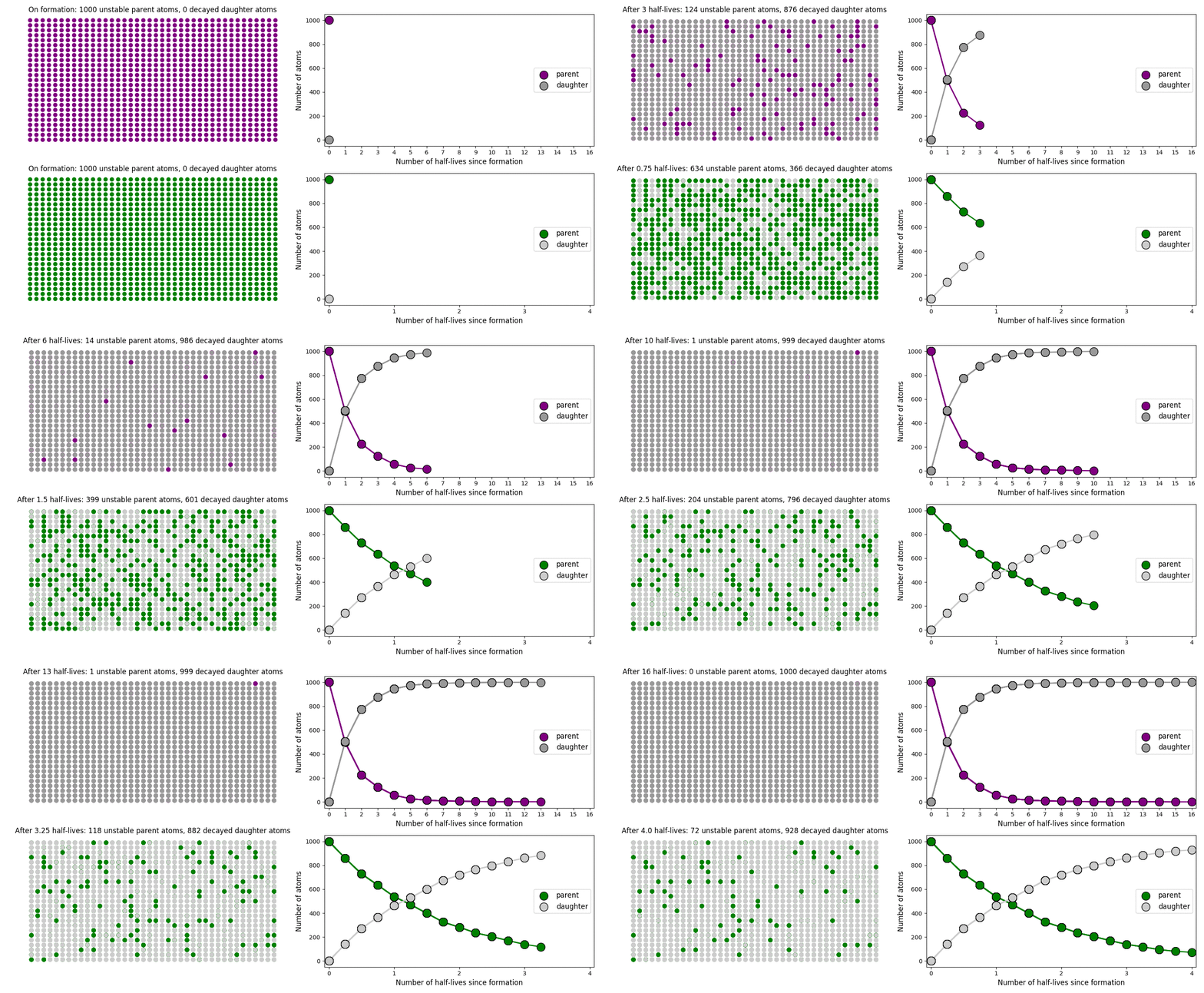
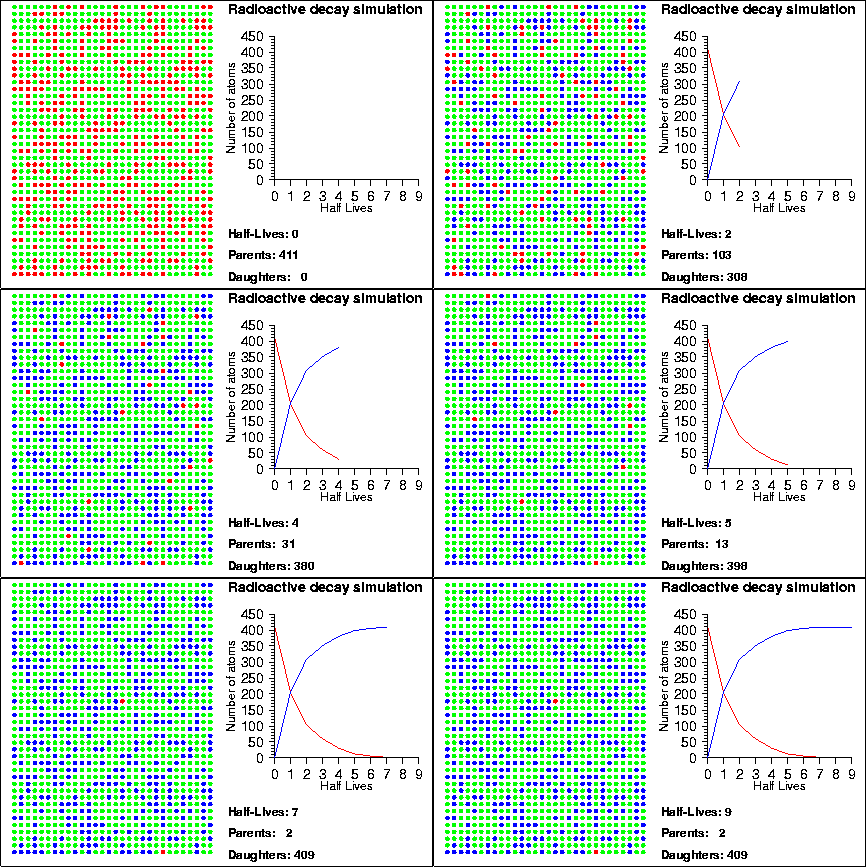
Simulating Radioactive Decay Dr Chris Rowan
Radioactive decay is defined as.

Why is radioactive decay random. Radioactive decay is the random process in which a nucleus loses energy by emitting radiation. Radioactive decay is the process in which an unstable nucleus emits radiation or particles to form another stable nucleus. Its random because the most statistically accurate description happens to be random and no determining factors have been found to date.
Unfortunately theres not really much of a meaningful answer which can be given here. The randomness of the nuclear decaysis due to this quantum mechanical probabilistic underpinning. Why is radioactive decay a random process.
The simplified version of why radiation occurs is a balance between attraction of the protons and neutrons in the nucleus and the positive charge of the protons repulsing each other. Why is decay random. As for the exponential decay.
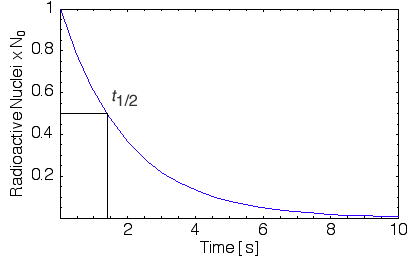
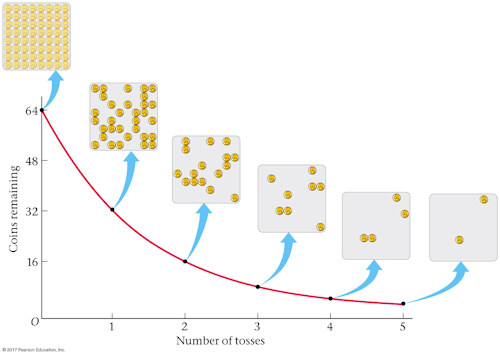
Yes it is random. 92 Use Figure 11 to determine the half-life for these dice using this model. Modern physics has shown experimentally that hidden variable theories fail and quantum mechanics is fundamentally random.
A nucleus does not age with the passage of time. Thus the probability of its breaking down does not increase with time but stays constant no matter how long the nucleus has existed. Consider a hill and a ball rolling upwards with energy not enough to climb it one would classically expect that there is no way that the ball is found on the other side and its explanation is pretty intuitive the ball just doesnt have enough energy to.
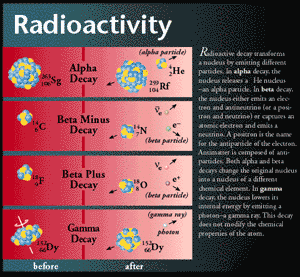
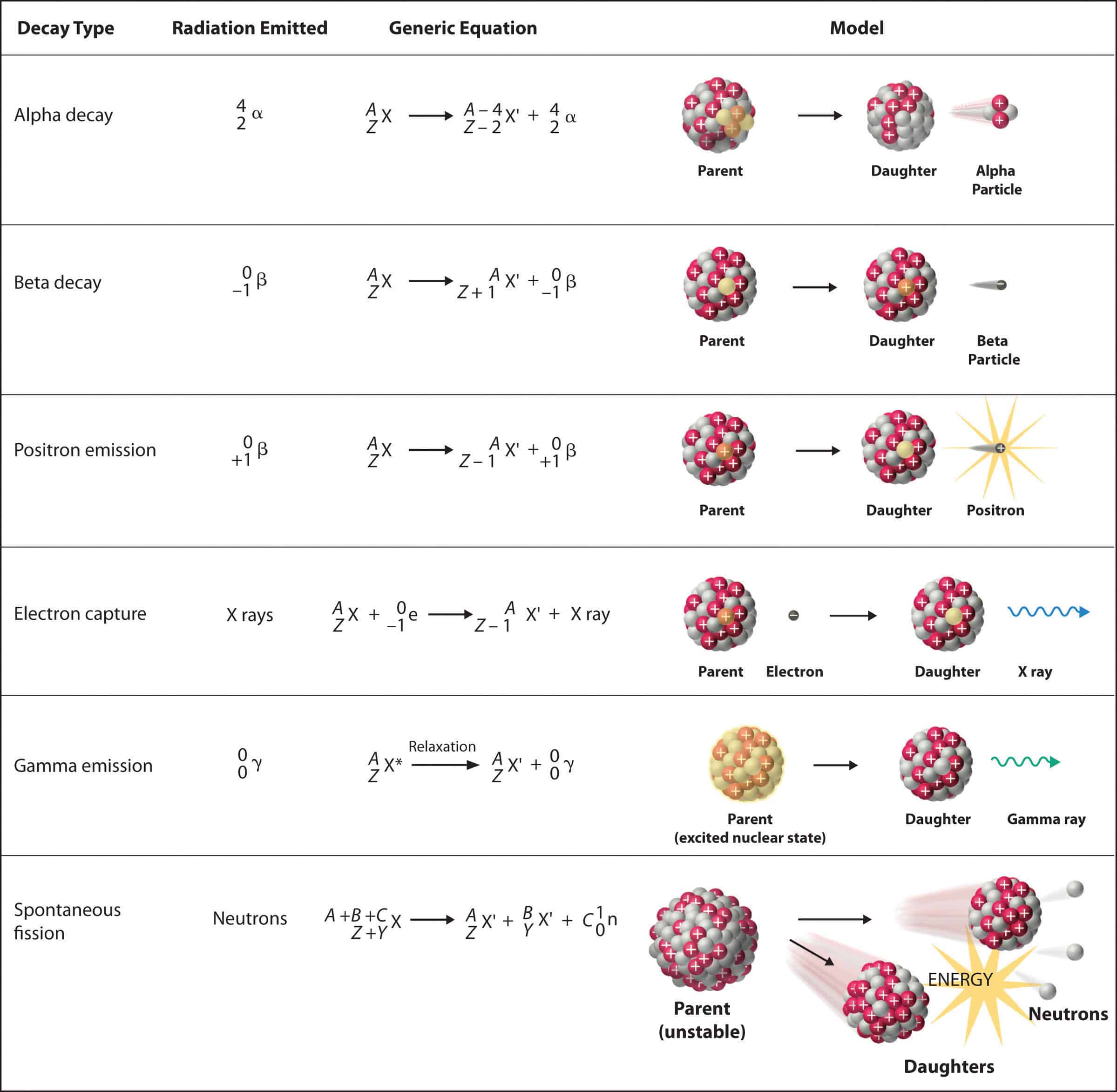
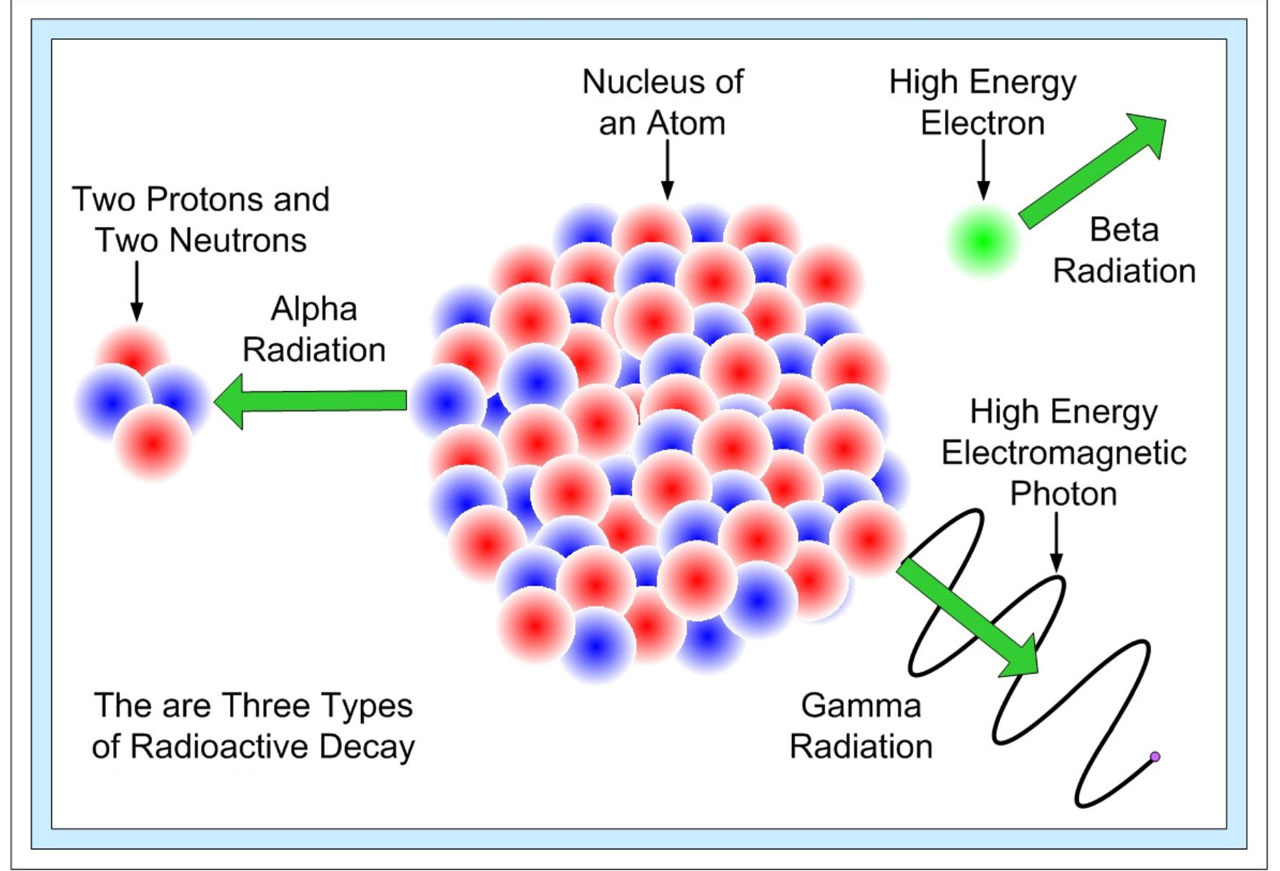
This has to be random because of quantum mechanics everything is fuzzy at that level and everything is a statistical process rather than a predictable one. A nucleus will regain stability by emitting alpha or beta particles and then cool down by emitting gamma. This is usually in the form of alpha particles Helium nuclei beta particles electrons or positrons or gamma rays high energy photons.
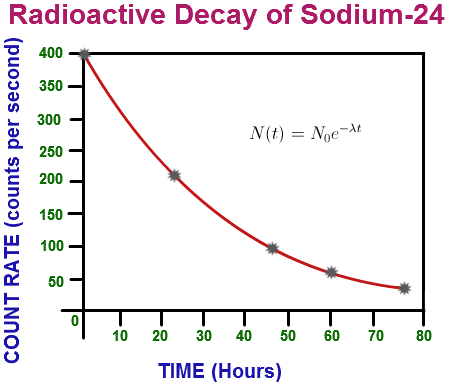
The spontaneous disintegration of a nucleus to form a more stable nucleus resulting in the emission of an alpha beta or gamma particle. This is called radioactive decay. The random nature of radioactive decay can be demonstrated by observing the count rate of a Geiger-Muller GM tube.
Radioactive decay is nothing but decay of unstable nuclei which give out streams of nucleons like alpha particles neutrons etc. Radioactive decay happens when a particle quantum tunnels into or out of the nucleus. However statistical randomness is a property of both true randomness and good pseudorandomness so until an experiment can distinguish between the latter two which might even be impossible in principle we cannot know for certain.
Get the balance right and you end up with a stable isotope get it wrong and the isotope is unstable and will decay. Show on Figure 11 how you work out your answer. Im not sure what the scope of this is and theres a chance that radioactive decay in particular doesnt have to be random but physics in general is.
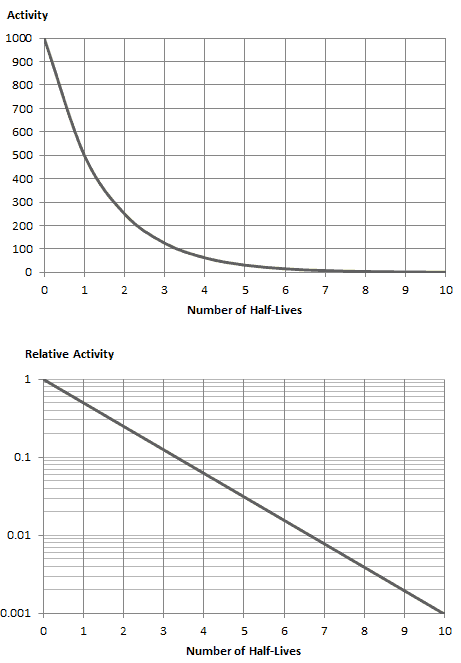
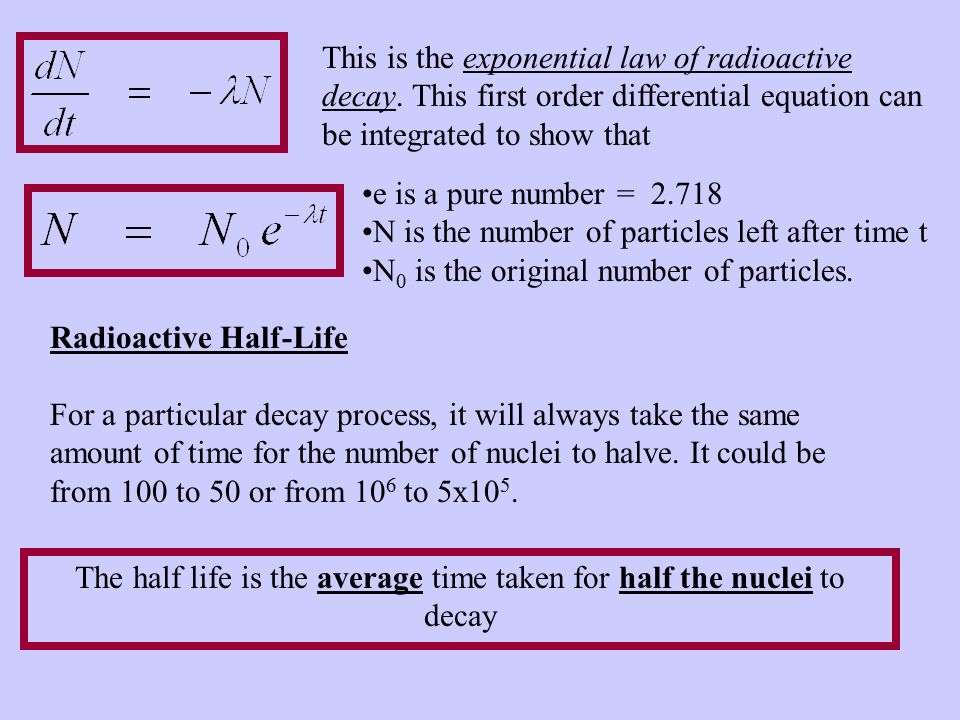
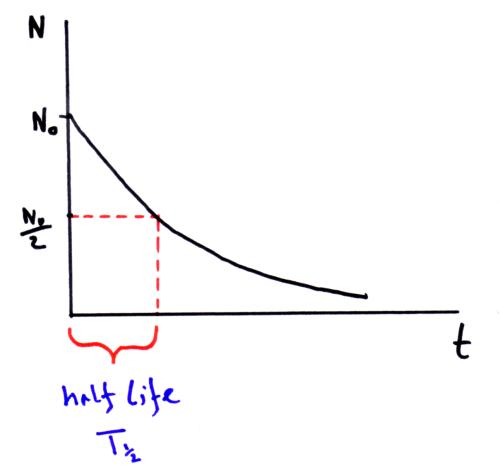
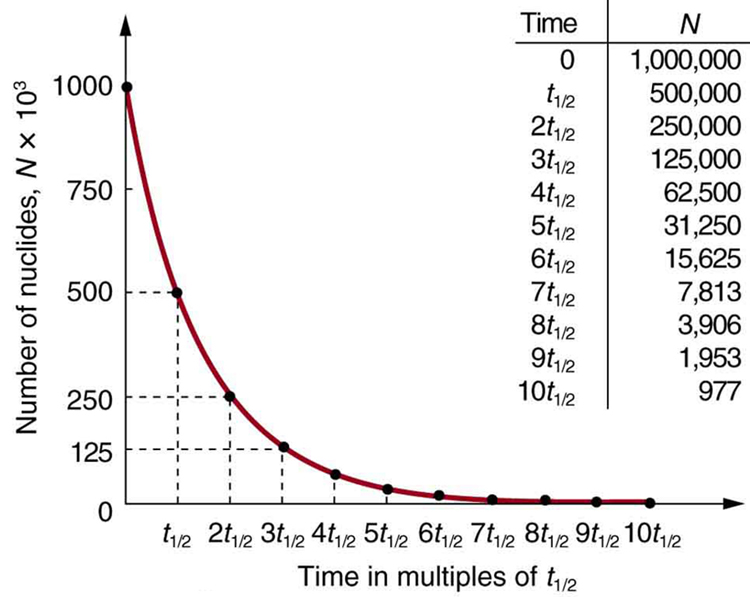
The fact that an ensemble of atoms has a specfic half-life. At any given time the probabilty that a given atom will decay is constant. The nucleus energy reduces making it.
Radioactive decay of an individual atom is random but when you consider the entire system that is the decay of a huge number of atoms the process of best described as stochastic. 91 Give two reasons why this is a good model for the random nature of radioactive decay. Many years ago I imagined that the apparent randomness of radioactive decay was simply the result of the random reconfigurations of nucleons.
It is impossible to predict the decay. I do believe we can say that radioactive decay is statistically random -- it produces datasets which do not appear to have any pattern in them. For example carbon-14 decays to nitrogen-14 when it emits beta radiation.
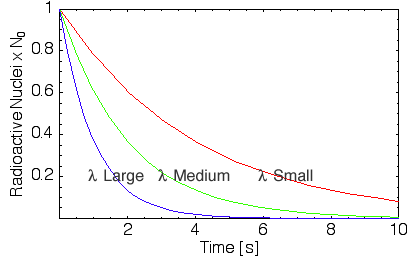
That is what leads to the exponential decay of radioactivity ie. _____ The students results are shown in Figure 11. Radioactive decay Decay is said to occur in the parent nucleus and produces a daughter nucleus.
Individual events in a stochastic process cannot be predicted but the collection of events in the entire process can be. Eventually I learned that this model does not explain the fact that sometimes alpha or beta particles are ejected from the nucleus with much less energy than the potential energy barrier that such particles would have to overcome. As this breakdown occurs the activity of any radioactive source becomes less.
The Random Nature of Radioactive Decay.
Radioactivity Radioactive Decay
The Random Nature Of Radioactive Decay Oc Dataisbeautiful
Radioactivity
What Is Radioactive Decay Law Definition
What Is Radioactive Decay Definition
The Random Nature Of Radioactive Decay Ppt Video Online Download
Radioactive Decay Nuclear Physics

The Open Door Web Site Ib Physics Atomic And Nuclear Physics Radioactive Decay
Lecture 38
Spontaneous Nature Of Radioactive Decay By Matthew Broadberry

The Random Nature Of Radioactive Decay Ppt Video Online Download

Radioactive Decay Types Article Article Khan Academy
Simulating Radioactive Decay Seth Stein
Radioactivity Law Of Radioactive Decay Decay Rate Half Mean Life Q A
The Mystery Of The Varying Nuclear Decay Physics World
Radioactive Decay Decay Constant Activity Half Life
Radioactivity Radioactive Decay
Half Life And Activity Physics
Radioactivity Radioactive Decay